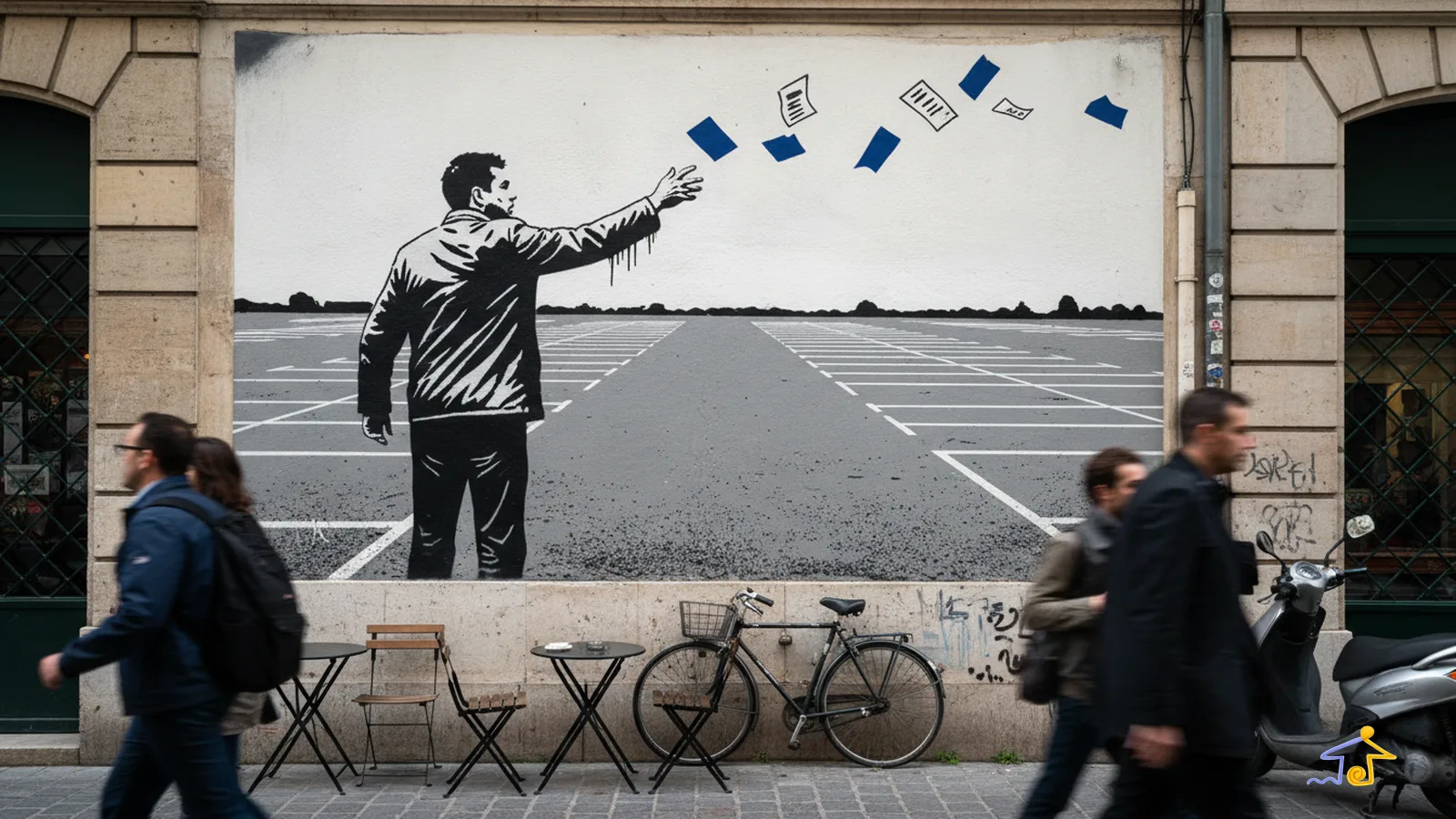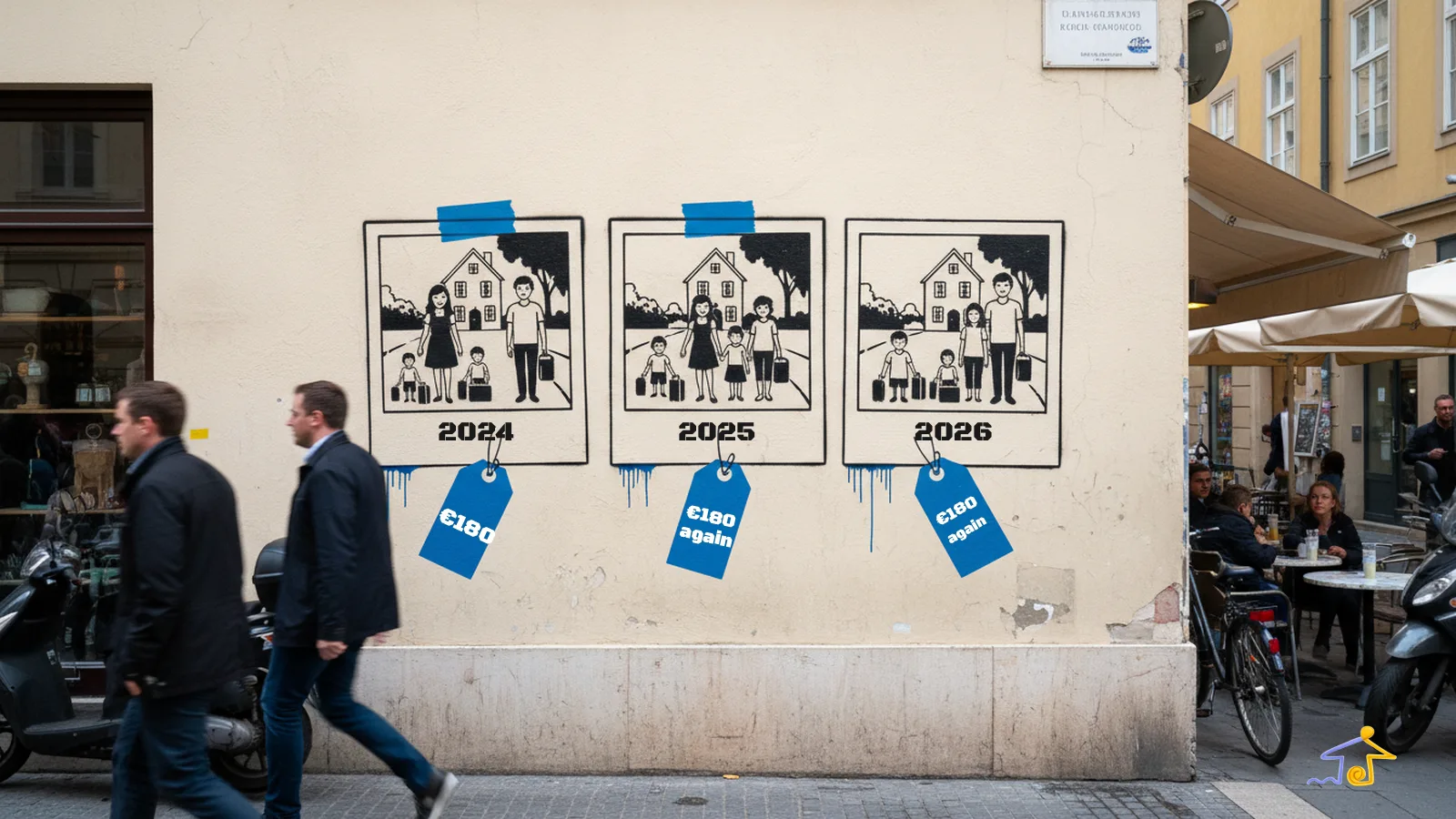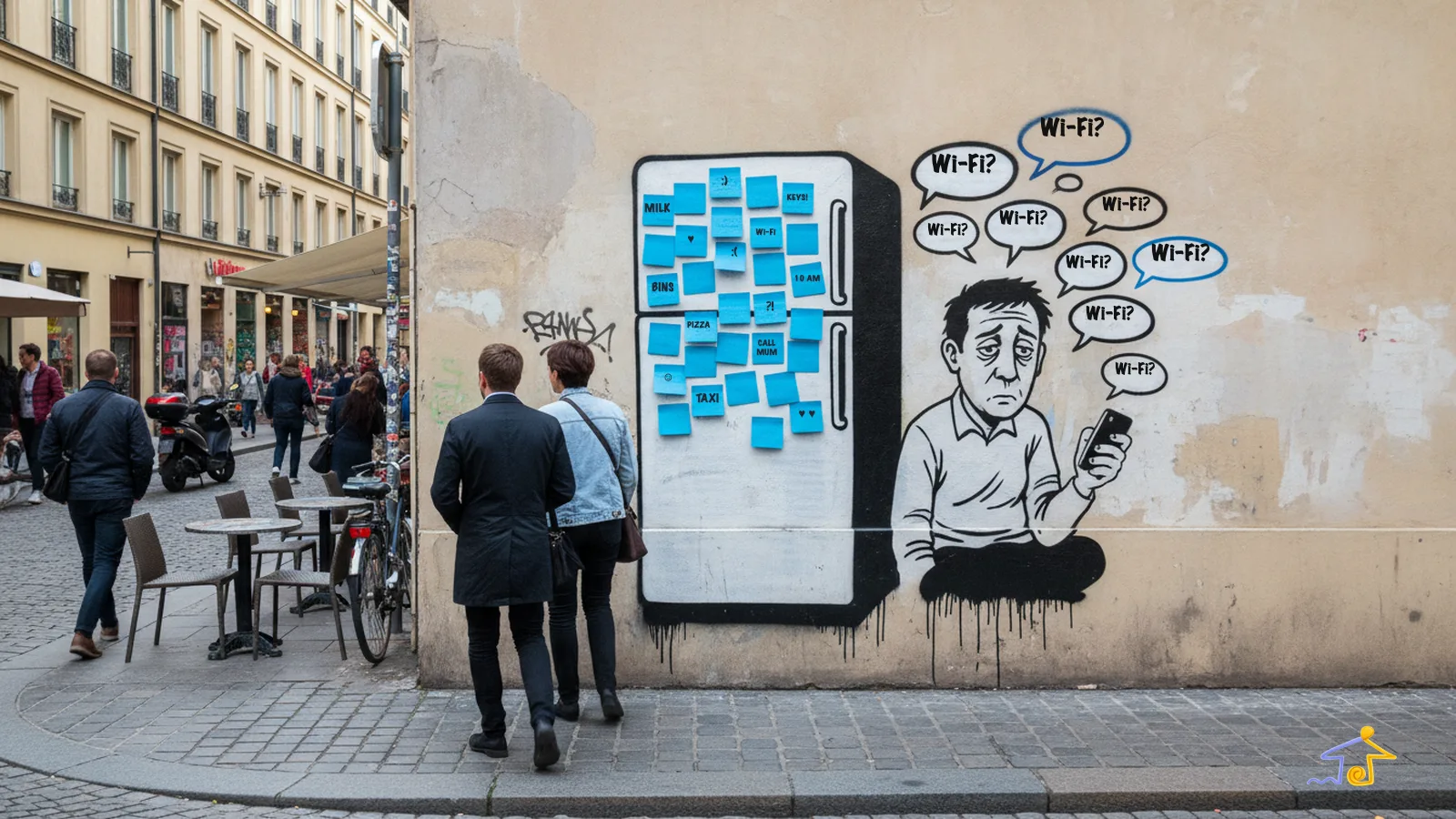
This year you have typed “the Wi-Fi password is on the fridge” about two hundred times. “Check-in is from 3 pm” another hundred and fifty. “Yes, there’s parking, just round the corner” you’ve stopped counting. Call it one minute per message: that’s six hours, almost a full working day, spent repeating the same sentences to different people. Nobody pays you for it, and no guest will remember you for it.
They’ll remember you for something else. And that something else is exactly what gets left behind while you answer for the two hundred and first time.
What do you repeat every week without noticing?
More than you think. Repetition is hard to spot because it arrives in pieces: one message now, one in an hour, one tomorrow morning. One by one they feel like nothing. Lined up, they’re a second job, unpaid.
The test for what to hand over to a machine is simple: if you do it more than three times a week and it’s always the same, it’s a candidate. If it changes every time, or it needs your judgement, it isn’t.
Think of the autopilot on a plane. It flies the long, boring stretch, straight and precise, without ever getting tired. But for take-off, landing and turbulence, the pilot is at the controls. Nobody would want it the other way round.
The one-week tally: your automation list in seven days
For seven days, keep a sheet of paper next to your phone (or a note on the phone itself). Every time you send a message or do a task you’ve already done before, add a tick next to it.
“Check-in time” ||||
“Where are the keys” |||
“Wi-Fi password” ||||| |
“Update the calendar on another platform” ||
“Ask for a review” ||
“Tell the cleaner” |||
At the end of the week, the line with the most ticks is the first thing to automate. You’ve just written your to-do list, in order, without spending a cent.
What’s worth automating?
The things guests want to know, not the things they want to hear from you. Usually these five:
- Pre-arrival messages. Confirmation, directions, check-in time, parking, Wi-Fi: one message scheduled a few days ahead and one on the day. The main booking platforms already let you do this, and so can your own direct booking system. Guests get everything when they need it, and you don’t have to remember.
- Check-in and keys. A key box with a code or a smart lock, and the code sent automatically with the arrival-day message. No more “we’re two hours late, can you wait for us?”.
- Synced calendars. If your place is on several platforms and on your own website, booked dates have to travel from one to the other on their own. It’s the most tedious job to do by hand and the most expensive one to get wrong: nobody forgets a double booking in August.
- The review request. A friendly message the day after check-out. Asking every time, at the same hour, in the same words, works better than asking now and then when you happen to remember.
- The cleaning reminder. Whoever cleans gets the date and time of the changeover as soon as a booking comes in. You stop being the switchboard.
A shortcut for the first one. Half of those questions never even get asked if the guest has everything in a single link: Wi-Fi, times, house rules, contacts, a map, your favourite places nearby. It’s called a digital welcome guide: guests open it on their phone, with no app to download, and you update it whenever something changes. Your pre-arrival message shrinks to one line: “everything you need is here”.
None of this takes the warmth away. Quite the opposite: a guest who gets the right information at the right moment thinks “how organised”, not “how cold”.
And what should never be automated?
Here’s the catch. Hosts who automate everything end up feeling like a vending machine: it works, but nobody comes back out of affection. These stay yours:
- The real welcome. Two lines written by you, with the guest’s name and something you’ve noticed about them (“I see you’re bringing the dog: the free beach is on the right”). Thirty seconds, tops.
- Problems. A broken water heater, a noisy neighbour, a key that won’t turn. An automatic reply to a problem is petrol on a fire. That’s when the guest wants a person, and right away.
- Negative reviews. The review request can be automated; the reply to a critical review can’t. Future guests read it, and they can tell straight away whether there’s someone on the other side.
- Where to eat. A list of restaurants they can find anywhere. “At Nikos, ask for the catch of the day, not the one on the menu” they’ll only get from you. It’s the reason people come back.
Rule of thumb: the system gives the information, you give the attention.
Where do I start, without becoming a techie?
With the tally sheet from the dropdown above. Then, if you’d like an order:
1. Calendars first. They do the most damage when they go wrong, and once they’re set up you never think about them again.
2. Then pre-arrival messages. Write them once, properly, calmly, as if you were writing to your favourite guest. Then let them go out on their own.
3. Then check-in and keys. It costs a little more (a key box or a lock), but it’s what gives you your evenings back.
And use the time you get back for the second list. A guest who feels truly welcomed is also the one who writes to you directly next year instead of going back through the platform: we talked about it in The Architecture of Sanctuary.
So, how many more times do you want to type “it’s on the fridge”?
The silence in the title isn’t a website that goes quiet or a host who disappears. It’s the phone that stops buzzing during dinner, while the guests already have everything they need. And when it does buzz, it’s for something that really deserves your answer.
Try the one-week tally. By the end of it, you’ll know exactly which two hundred messages you’ll never have to write again.
Curious what a digital welcome guide looks like in practice? Ours is called BlueWelcome, and we built it first for the homes we manage. Or get in touch: the first chat is free and with no strings attached.