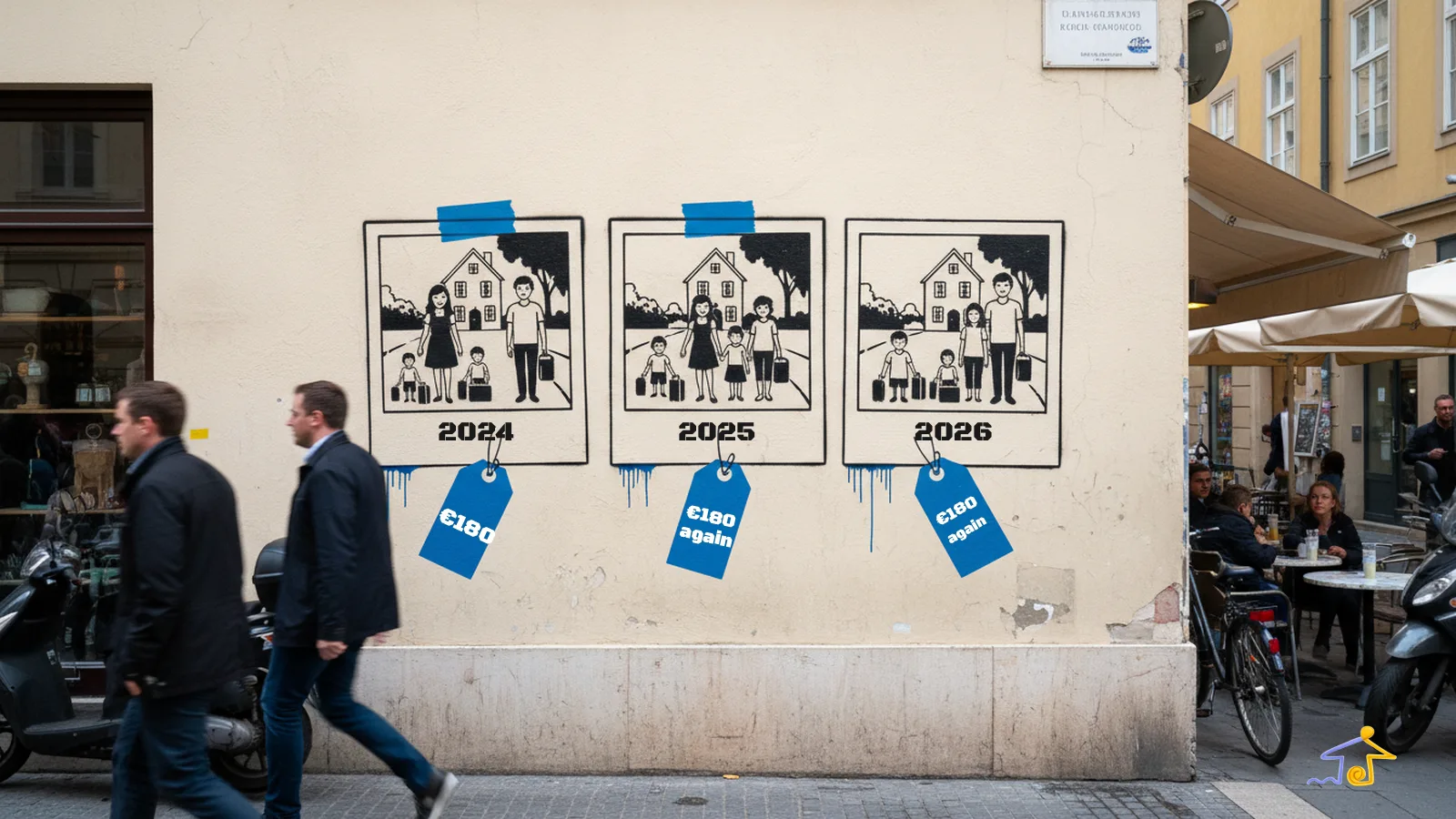
After eight years, Marco sells his holiday home. The buyer looks at the walls, the new kitchen, the view. Then asks: “And the guests?” Marco opens his phone: 300 five-star reviews, families who have been coming back for years. None of it passes to the new owner. Eight years of work, and what gets sold is the square metres.
Marco didn’t do anything wrong. He did what almost all of us do: he built value where it was easiest to build it, inside the platforms that brought him guests. It worked beautifully, as long as the question was “how much will I make this year?”. It stopped working the day the question changed: of everything I’ve built, what is actually mine?
A house is worth two things
A holiday home has two values. The first is the walls: square metres, location, condition. The surveyor measures it, the notary knows it. The second is what the house can do: fill the calendar, get chosen, get remembered. It’s the value of the house as a business, and it’s often where the difference lies between a house that earns and a house that costs.
The trouble is that the first value comes with a title deed, and the second doesn’t. The reviews, the listing that earned its place on the first page, the guests who come back: all of this lives in places that aren’t in your name. It isn’t a scam and it isn’t a conspiracy: it’s the deal you signed in exchange for visibility, and it’s a fair deal. But it pays to know it before you have to read it at the end of a negotiation.
The inventory: two columns
Take a sheet of paper and draw two columns: “mine” and “on loan”.
The mine column usually holds the house, the furniture, the photos (if you took them yourself, or paid a photographer and got the rights), the texts you wrote, and the name of the house, if it’s registered.
The on loan column holds the portal listings, the reviews on them, your ranking in the results, and almost always the guests’ contact details. Booking passes on “relay” email addresses that stop working after the stay; Airbnb doesn’t allow taking guests off the platform. The rules are clear and they make sense: that guest was brought by the portal.
For almost everyone, the second column comes out longer than the first. That’s not a problem as long as everything is going well. It becomes one the day you want to change course: sell, hand the management to someone else, open a second house, or simply stand a little more on your own two feet.
What really happens when you sell
On Airbnb, a listing can’t be transferred to the buyer: usually the seller deactivates it and the buyer creates a new one from scratch. In some cases you can ask for the reviews to be moved, but only under certain conditions and with the platform having the last word. On Booking, too, a change of owner goes through a request to support, with the deed of sale in hand, and any connected software (the channel manager, for instance) has to be reconnected.
In plain terms: at best, part of the work carries over, after some paperwork. At worst, the buyer starts again from square one, and knows it. And a buyer who knows they’re starting from zero pays for the walls, not the business.
What passes to the buyer, platform by platform (for those who do this for a living)
Airbnb: the listing, no; the reviews, maybe, on request, at the platform’s discretion.
Booking: change of owner on request to support, with proof of sale; connections to external software are reset and have to be redone.
Google Business Profile: if the owner changes but the name stays the same, the reviews stay.
Website and domain: they pass with a contract, like a car with its logbook.
Guest list collected with consent: it passes, if your privacy notice allows it (worth checking with whoever handles your privacy).
The moral: the more lines you have in the last three, the more the house is worth as a business, and not just as a property.
Moving lines from one column to the other
The good news is that the “mine” column can grow, and there’s no need to fight anyone. You work alongside the portals, not against them.
1. A website with your name and a domain registered to you. It’s the only address on the internet nobody can move for you. Check who the domain is registered to: more often than you’d think, it’s the agency, or the cousin who bought it “to make things easier”.
2. A guest list, asked for in person and with consent. At check-in, at check-out, with a simple question. We talked about it in The Architecture of Sanctuary: it’s also the cleanest way to avoid paying twice for the same guest.
3. A Google Business Profile, looked after like a listing. The reviews there are tied to the house and its name, not to an account passing through. Ask happy guests to leave one there too.
4. Your data in a place you can export it from. Bookings, revenue, guests: whatever software you use, ready-made or made to measure, there’s only one question to ask: “If one day I wanted to take my data with me, could I?”. If the answer is yes, you’re fine.
And for those who manage other people’s homes: put in writing who owns the listings, the reviews and the contacts when the contract ends. It’s the least romantic conversation you can have with an owner, and it’s the one that prevents the worst disputes. An owner who knows what stays in their hands trusts you more, not less.
What to do tomorrow
Just one thing: take the inventory. One sheet, two columns, one hour. Not to scare yourself, but to know. If the “mine” column is short, you’ve found what to work on this winter. If it’s already long, congratulations: you’re building a house that’s worth something even when you’re not there.
And a question to keep in your pocket: if you had to sell tomorrow, or just change who manages the house, what would you take with you besides the keys?
The keys pass with the deed. Everything else passes only if you’ve put it on the right side of the sheet.
Want to take your house’s inventory with us? Get in touch: the first chat is free and with no strings attached.