Marta finds your villa on Instagram one evening in February. The photos are lovely, and so is the website. July is free, and the price is 15% lower than on Booking. She scrolls all the way down, ready to book, and reads: “To confirm, please send a bank transfer of €600 to the following IBAN.”
She stops. She opens another tab, finds the same villa on Booking, pays more, and puts her phone down happy.
The price was fine. She loved the house. She got scared. And in direct bookings, fear costs more than any commission.
Why do guests trust the platform and not you?
Because on the platform they aren’t trusting you: they’re trusting the platform. They pay by card on a site they know. They read reviews written by other guests, not by you. They know that if they arrive and the house isn’t there, there’s someone to call and someone who will give their money back.
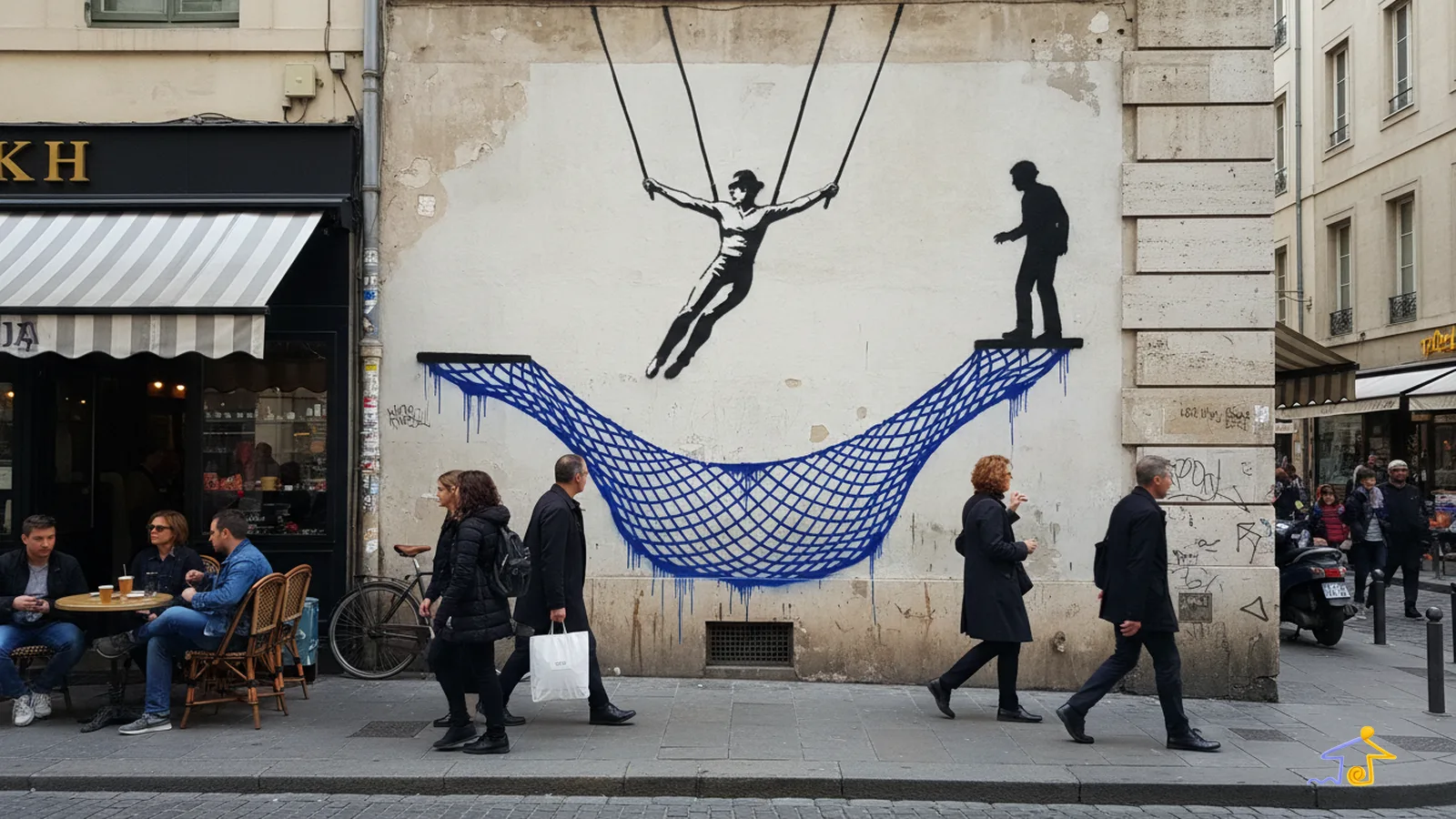
Think of a trapeze artist. There’s a net under the trapeze, and the audience claps without worrying. For a guest, booking direct is jumping without the net. Some do it: the brave ones, or the ones who already know you. Everyone else stays on the platform.
Your job isn’t to talk them into jumping. It’s to put the net up underneath.
And it isn’t paranoia on their part. Fake listings that ask for a bank transfer really exist, and the platforms themselves say it everywhere: “never pay outside the platform”. To Marta, your IBAN looks exactly like what she’s been told to avoid.
Which safety nets are guests looking for?
There are five. You don’t need all of them by tomorrow, but every one that’s missing is a guest going back to the platform.
- Exist outside your own website. You wrote your website yourself, and the guest knows it. They look for confirmation elsewhere. A Google Business Profile with your real address, photos of the house and reviews from people who stayed is the strongest proof you can give, precisely because you don’t control it. If your reviews only live on Airbnb, nobody sees them from your website, and to the guest it’s as if they didn’t exist.
- A payment method they recognise. A credit card, through a payment system the guest has seen a thousand times. Bank transfer can stay as a second option for those who prefer it, but never as the only way. In a guest’s mind, “I’m paying by card” means “if something goes wrong, my bank will help me.”
- Clear terms, in writing, before they pay. How much is paid now and how much on arrival. Until when they can cancel for free. What happens if their flight is cancelled. If these things aren’t written down, guests imagine the worst. If they’re written well, guests think: this person is serious.
- A person who answers. A WhatsApp number or an email that replies the same day, with a name at the bottom. A question asked before booking and answered within an hour is worth more than ten reviews: the guest has just checked for themselves that there’s someone on the other side.
- The same name everywhere. The same house name, the same photos, the same address on Google, on your website, on Instagram and on the platforms. If you’re “Villa Mare” on Instagram, “Casa Azzurra” on your website and nowhere on Google, the guest doesn’t think “how creative”. They think “something doesn’t add up”.
The suspicious friend test
Ask a friend who doesn’t know your house to play the guest for five minutes. Give them only the name of the house. They:
1. search for it on Google and see what comes up;
2. open your website and try to get all the way to payment, without paying;
3. send you a question through the website and time how long you take to reply.
Every time they hesitate, even for a second, they write one line: “here I wondered if it was real”, “here I didn’t understand how much I’d pay”, “here I didn’t know what happens if I cancel”. At the end you have the list of missing nets, in order, written by someone with no reason to pay you a compliment.
Is a beautiful website enough to earn trust?
No, and sometimes a gorgeous website makes it worse. Fake listings often have the best photos of all, because they steal them. A guest who has already heard a bad story knows this, and faced with perfection without proof they get more suspicious, not less.
Trust doesn’t come from photos. It comes from the details no scammer would ever bother with: a review from last September with a full name, an owner’s reply under a critical comment, the exact check-in time, a phone number that answers in your voice. They’re small, boring, not very photogenic. And that’s exactly why they work.
Where do I start?
With the suspicious friend test. Then, if you want an order:
- First, your Google Business Profile. It’s free and takes an afternoon. Address, photos, check-in times, and from then on ask every guest for a review there too, not only on the platform.
- Then card payment. Even the simplest option, even just for the deposit. The day you remove “bank transfer only”, someone stops running away.
- Then your terms. One page, five lines: what is paid, when, how to cancel. Put it before the “book” button, not hidden at the bottom of the site.
And if you’re wondering what your website should say to the people who open it at night, we talked about it in Is Your Website Open at 11:40 PM?
So, does Marta book with you this time?
Let’s replay the scene. Marta finds the villa on Instagram, opens the website, sees July is free. Before booking she searches for the name on Google: up comes the profile with the map, forty reviews, the latest from three weeks ago. She messages you on WhatsApp, “Is there parking?”, and twenty minutes later she has the answer, signed with your name. She reads that she can cancel for free up to thirty days before. She pays the deposit by card.
Same price as before. Same house. Same Marta. Only this time, under the trapeze, the net was there.
If you’d like to see which of these nets your own website and listings are missing, get in touch with us: we offer a free initial consultation with no commitment.