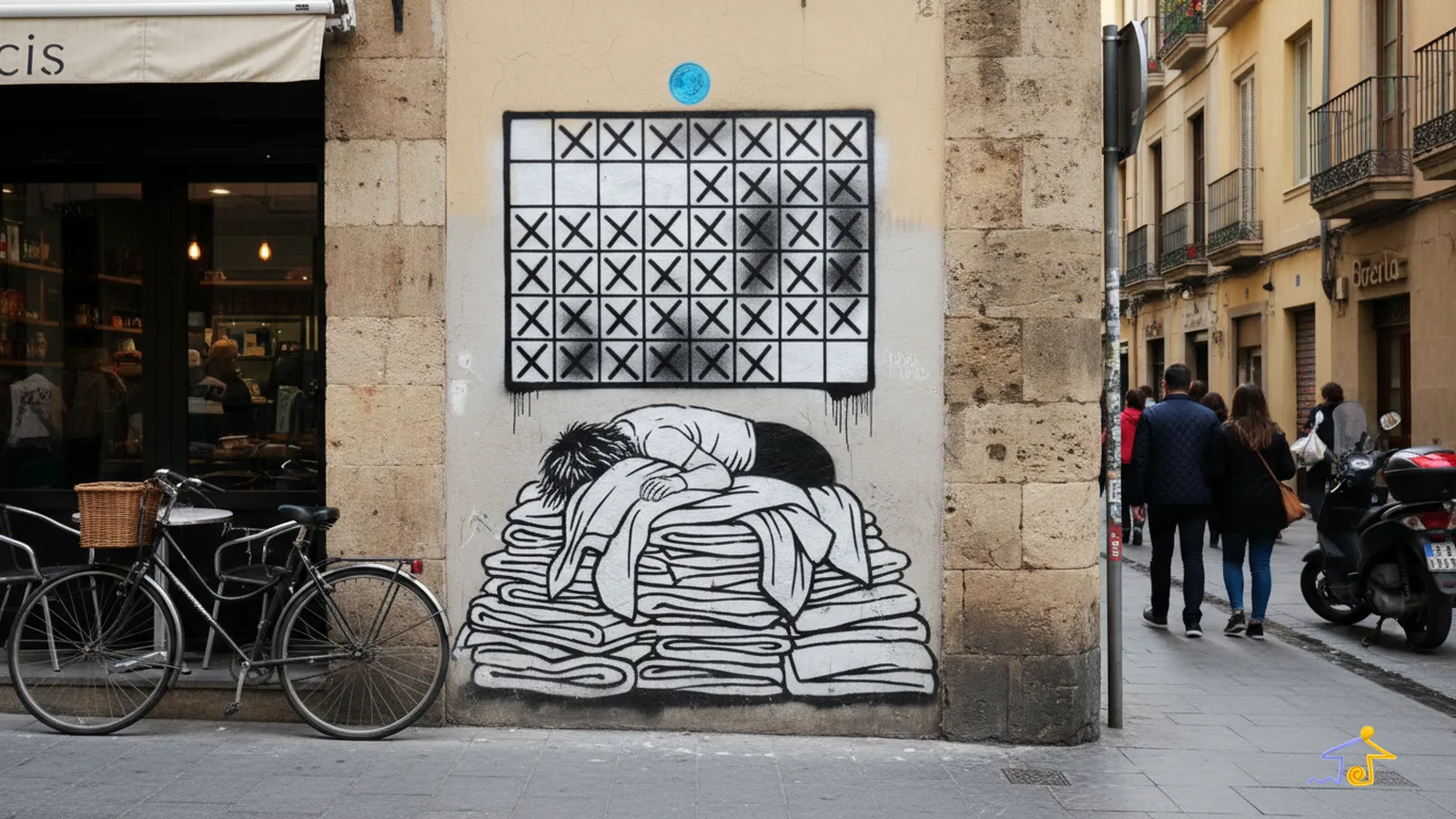
In August, Laura’s calendar is solid red: 31 nights out of 31. She tells everyone. In September she does the maths: commissions, twelve changes of sheets, the air conditioning running day and night, the washing machine giving up on the 18th. She ends up with barely more than in June, when she had 18 nights. The full calendar was real. The profit, much less so.
Laura didn’t do anything wrong. She looked at the number everyone looks at, the one the platforms put in front of us every morning: nights sold. It’s an honest number, and it says something true: people like the house. But that’s all it says. It doesn’t say how much you keep, it doesn’t say whose guests they are, and it doesn’t say how much of your life went into it.
For that you need three other numbers. No software, no accountant: one sheet, three lines, five minutes on the last day of the month.
Number 1: what you keep per night
The first is the simplest and the most ignored. Take what you earned in the month, subtract everything the month cost you (commissions, cleaning, laundry, bills, the repair you didn’t see coming) and divide by the nights sold.
What comes out is your net per night. And it’s often a surprise, because full months come with full costs. More arrivals mean more cleaning, more linen, more energy, more wear and tear. If you also lowered the price to fill the calendar, the sum gets squeezed from both sides.
Laura’s numbers, June against August (example figures)
June: 18 nights at €110 = €1,980. Commissions at 15% €297, 5 cleanings €250, laundry €125, utilities €120. She keeps €1,188, that is €66 a night.
August: 31 nights at €120 = €3,720. Commissions €558, 12 cleanings €600, laundry €300, utilities €450, washing machine €350, odds and ends €150. She keeps €1,312, that is €42 a night.
August brought in €124 more than June, with 13 more nights and 7 more arrivals. The calendar nearly doubled. The net didn’t.
This doesn’t mean August was a mistake. It means the August price was perhaps too low, or the stays too short, or both. Without the number, you can’t tell. With it, next year you can decide: raise the price a little, ask for a three-night minimum, accept a few empty nights in exchange for a higher net.
Number 2: how many bookings are yours
The second number you can count on your fingers. Of this month’s bookings, how many came directly to you (through your website, a phone call, an email) and how many from guests coming back?
This isn’t a contest against the portals. The portals bring people who would never find you on their own, and their work is worth the commission. But a house that lives only on portals depends on rules written by someone else: an algorithm change, a commission that goes up, a listing that slips to page two, and the calendar empties without you having changed a thing.
Every direct booking, on the other hand, is a line in your own column. Someone coming back for the second time has already chosen you: why make them pay the entry ticket again? We talked about it in The Architecture of Sanctuary, and it’s also why, when you sell, it matters so much what is really yours (Sovereign Asset Architecture).
You don’t need to start high. One booking in ten is already a start. What counts is the direction: if by the end of the year it’s two in ten, the house is learning to walk on its own.
Number 3: how many hours you put in
The third is the number nobody writes down, because it’s a little scary. How many hours did you give the house this month? Messages, check-ins, checking the cleaning, waiting for the repairman, the forgotten key at eleven at night. Count them, even roughly.
Then divide the month’s net by those hours. What comes out is what your hour is worth.
In June Laura had 5 arrivals and put in about 15 hours: her hour was worth €79. In August, with 12 arrivals and a broken washing machine, it was 40 hours: €33 an hour. The same job, paid less than half. And August is also the month she would have liked a bit of the sea herself.
This number isn’t there to make you feel guilty. It’s there to show you where to act. If the hours go on the same messages over and over, you can prepare ready-made or automatic replies. If they go on check-ins, you can think about arrivals without keys. If they go on one-night stays, you can raise the minimum. Every hour you save is an hour that comes back to you, and your hour has a price, even if nobody pays you for it.
The end-of-month sheet
That’s the whole method. On the last day of the month, three lines:
1. Net per night: (income − costs) ÷ nights sold.
2. Your bookings: direct + returning guests, out of the total.
3. What your hour is worth: the month’s net ÷ the hours you put in.
Next to each, the same number from the month before. That’s all. After three months you see a trend; after a year you have a map of your house that no platform can give you, because no platform knows your costs, your loyal guests or your evenings.
Nights sold are still a good number: they tell you the house is liked. But a house that’s liked isn’t yet a house that pays. The difference lies in these three numbers.
One question before we close
If you had to choose today between a full August at €42 a night and an August with five empty nights at €70, which would you pick? And which one did you pick last year, without knowing it?
A full calendar tells you the house is liked. Three numbers tell you whether it pays.
Want to run the numbers together? Get in touch: the first consultation is free. Bring your worst month: that’s where you learn the most.