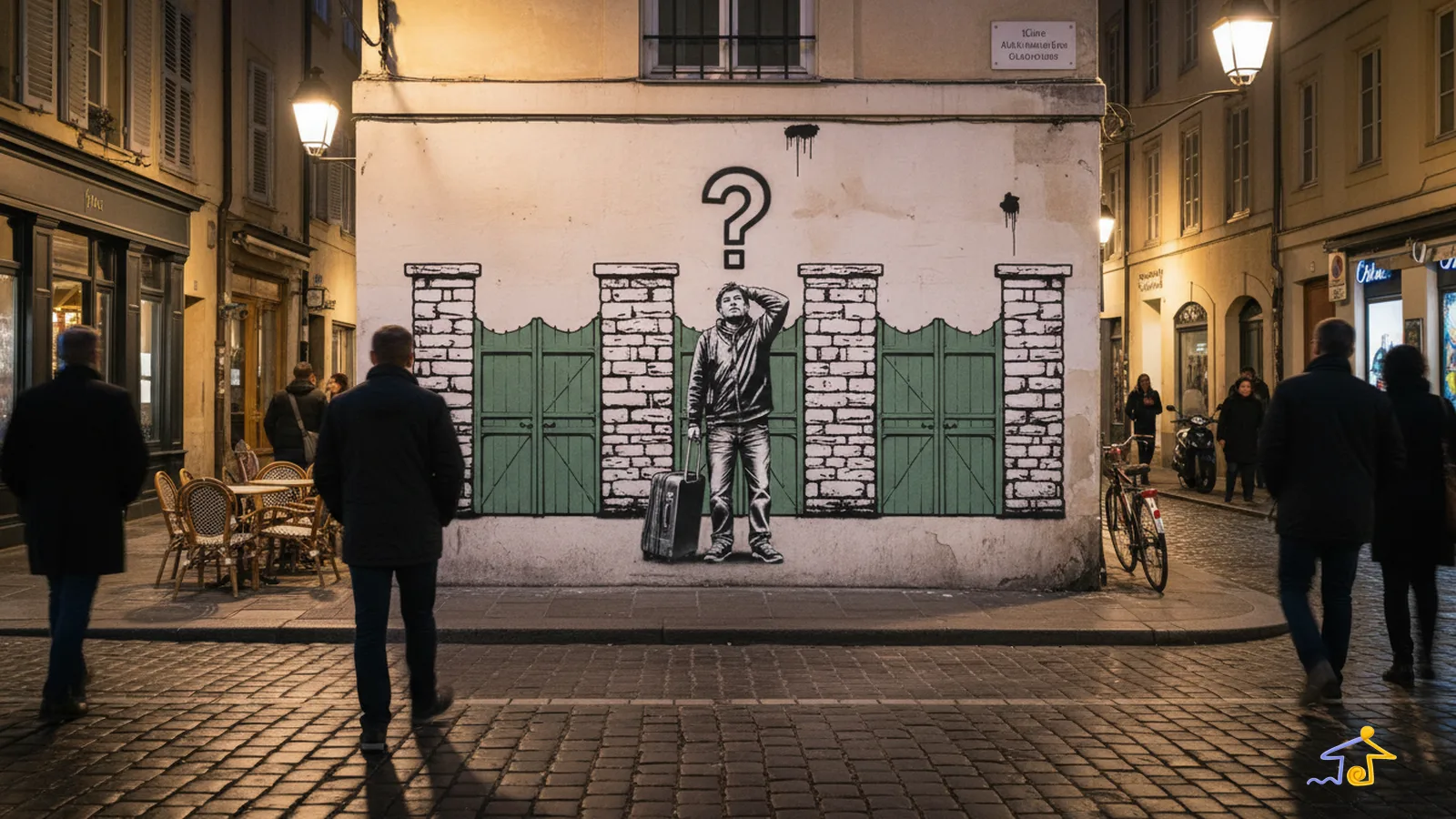
It’s 10:10 PM. David has been driving for six hours, with his wife, two kids and a dog. The satnav says “You have arrived.” In front of him there are three gates. All of them green. The welcome message, which arrived two weeks ago and took some digging to find among a hundred chats, says: “the green gate after the bend.” Which bend?
Twenty minutes with the phone torch. One child is crying, the other needs the toilet, the dog barks at all three gates. In the end David calls, you answer from your sofa and guide him by voice: “No, the next one. No, after that.” They’re in.
The house is gorgeous. Clean, fresh, the bed made like a hotel. And the review, a week later, begins like this: “Beautiful house, a bit hard to find…”
That little “…” is worth half a star.
Why do the first ten minutes matter so much?
Because they’re like the opening of a film. If the sound crackles in the first few minutes, even once it’s fixed you spend the rest of the film waiting for the next glitch. A guest who has circled for twenty minutes in the dark walks in with the same mindset: they’re looking for the flaw. And they find it, because there’s always one.
There’s something else. Guests never arrive at their best. They arrive after a flight, a ferry, hours of motorway. They’re hungry, tired, maybe with kids who’ve had enough. In that state a step becomes a mountain, and a wrong gate becomes a story worth telling. Online, with stars.
The good news: it’s also the moment when it takes almost nothing to win them over. A light left on at 10:10 PM feels like a hug.
What are the five stages from the car to the sofa?
Walk through them with your guest’s eyes, one at a time.
1. Finding the house. An address isn’t enough: in the countryside, by the sea and on islands, navigation apps are often a few hundred metres off. Send the exact location (the pin on the map), a photo of the gate or front door by day and one by night, and the last stretch in words, with a landmark nobody can miss: “after the bakery, the second gate, the one with 14 painted on the white wall.”
2. Parking. Where does the car go? Is it free? Is a permit needed? Are there streets cars can’t enter? One photo of the parking spot, with an arrow, saves laps around the block and fines. If parking is far from the door, say so in advance: someone with three suitcases wants to know.
3. Getting in. The key box must be easy to find in the dark: close to the door, at eye level, lit. The code should be repeated in the arrival-day message, not only in the one from three weeks earlier. And you need a plan B: a number that actually answers, whatever time the guest turns up.
4. The first look. It’s the photo the guest takes in their head as they open the door. A lamp switched on (one is enough, with a timer that costs a few euros). The right temperature: cool in summer, warm in winter. No forgotten mops, no owner’s boxes in the corner. If there’s a view, curtains open: let it be the first thing they see.
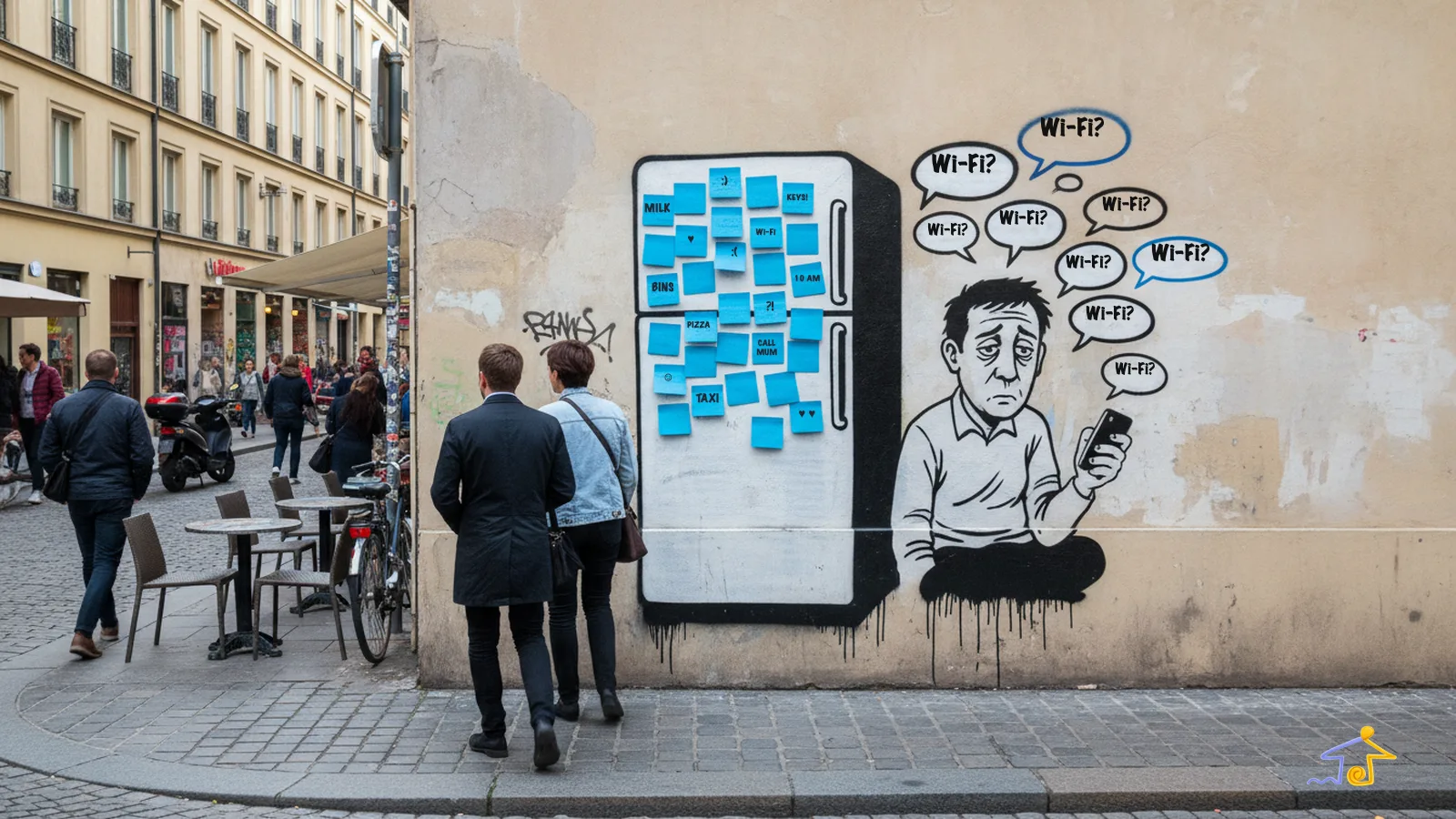
5. The first thing they need. After a journey, guests look for three things, in this order: the bathroom, the wifi, something to drink. The bathroom should be easy to find. The wifi password belongs on a card in plain sight, on the table, not buried in a folder. And a bottle of cold water in the fridge costs fifty cents and is worth a whole sentence in the review.
The stranger test: see your arrival through new eyes
Ask a friend who has never been to your home to play guest for one evening. Give them only what you give your guests: the arrival message, the photos, the code. No explanations by voice.
They set off at the time your guests usually arrive (ideally after dark) while you stay home with your phone on.
Every time they call you, mark a point.
Every time they stop and think “now what?”, they ask you to mark another one, even if they don’t call.
Once they’re inside, ask them: “What was the first thing you saw? The first thing you looked for?”
Zero points: you’re all set. Every point is a gap to fill, and it’s exactly where your guests get stuck. They just don’t tell you. They write it.
How much does it cost to fix it all?
Far less than a lost star. You take the photos of the gate and the parking with your phone, for free. The map pin is free. A lamp with a timer costs around twenty euros, a small solar light above the key box even less. The wifi card costs a sheet of paper and a marker. The water in the fridge, as we said: fifty cents.
The real cost is something else: half an hour spent looking at your own arrival through the eyes of someone who has never been there. It’s the half hour almost nobody takes, because they know their own home by heart. And that’s exactly the problem.
Where do I start?
Three moves, in this order:
1. Rewrite the arrival message, with photos. Pin, gate by day and by night, parking, key box, code. All in one message, sent on arrival day. If you’d like it to go out on its own, at the right time, we explained how in The Architecture of Silence.
2. Run the stranger test. One evening, one friend, phone on. It will tell you more than ten reviews.
3. Sort out the light. The lamp with a timer and the little light over the key box. It’s the smallest move and the one guests notice most.
Same evening, same 10:10 PM
Back to David. Same evening, same 10:10 PM, same tired kids. This time, in the message that arrived that morning, there’s a photo of the gate with 14 on the wall. The little light over the key box is visible from the road. Inside, a lamp is on, the wifi card is on the table, there’s cold water in the fridge. No phone call. You’re on your sofa and you don’t even know they’ve arrived.
The review, a week later, begins like this: “Found everything first time.”
No little “…” at all.
Want your arrival message, photos and house info all in one link? Ours is called BlueWelcome, a digital welcome guide we built first for the homes we manage. Or get in touch and we’ll run the stranger test on your home with you: the first chat is free and with no strings attached.